
Church Finance Committee Responsibilities: Managing Church Finances
By Kathy Holt, Partner & Trainer
This article is for those responsible for church finances. Churches give this place of responsibility many different names….Church Board, Church Finance Committee, Church Finance Team, Stewardship Committee….the list goes on.
If you are on the financial leadership team, I know you have a heart to serve and a passion to serve. Once in that seat, did you realize that church finances and clergy payroll are very different from regular personal or business accounting?
You don’t have to be an accountant to serve well on a church finance team. But you do need to understand the responsibility you’ve been given. Below is an overview of the top responsibilities of a church finance committee.
What does a church finance committee do?
Those on a church finance team are responsible for overseeing the church’s finances. That includes managing the budget, designated funds, and payroll packages.
It is important for a church finance team to work with excellence and integrity. Because ultimately, it is not just about managing money well. It’s about helping your church use its resources wisely to carry out the ministry God has called it to do.
What are the duties of a church finance committee?
The first responsibility is to BE PART OF THE TEAM.
Mark 3:25 says “If a house is divided against itself, that house cannot stand.” If your team chooses not to work together, division creeps in. You cannot move forward with decision making when there is division.
Without clarity in budget, delegating funds, or managing the cash flow, your divided team then impacts your church’s ministries. The ministry God has called your church to do is not fully realized.
Here are some ways to work together as a church finance team:
Invite the Holy Spirit to be a leader of the team. What are the Holy Spirit’s plans and how is the team all working together to achieve them?
Learn about and use the gifts of your team. 1 Peter 4:10 says, “Each of you should use whatever gift you have received to serve others.” Each member of your team has specific talents and insights. What happens when you bring them all together?
Listen to your church bookkeeper. Your church bookkeeper deals with the ins and outs of the funds every day. They may have insight into the finances that you may not otherwise see. Because of that, the church bookkeeper should also be part of your larger team.
The second responsibility is to STEWARD FUNDS WITH EXCELLENCE & INTEGRITY.
Work with a reasonable budget. Ask yourself:
Does your church have a reasonable budget?
Can it be reasonably be followed for the year?
Does the budget truly reflect the mission and vision of your church?
Does it include a budget to save up reserve funds for unexpected or large building repairs or maintenance?
Does it have a plan for reserve funds for ministry growth and opportunities?
Is the budget respected and monitored for any needed adjustments?
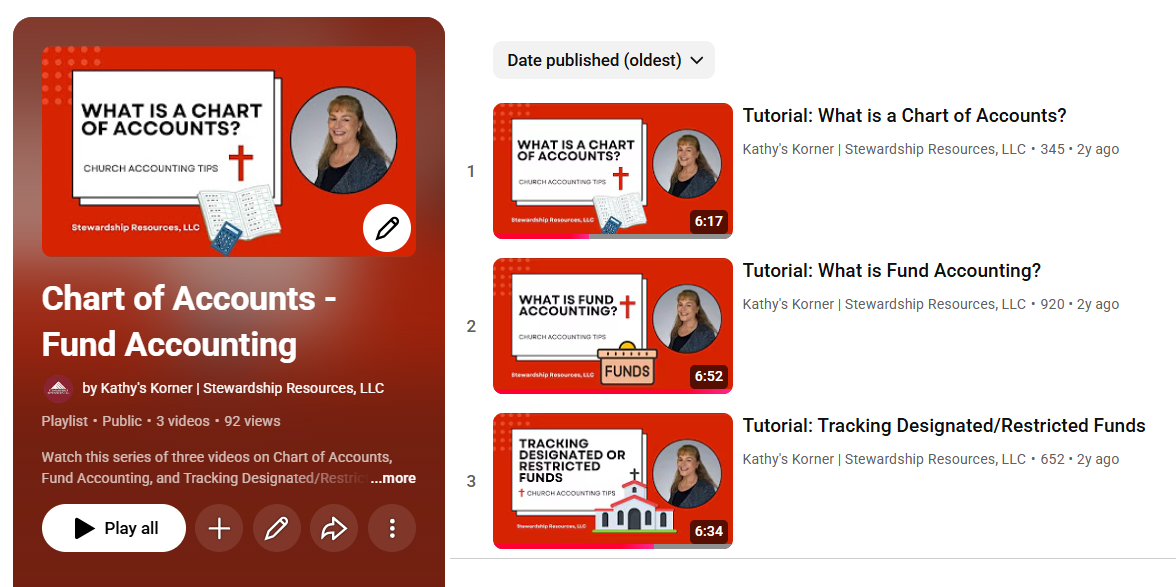
Use designated funds only for their designated purpose. Designated/restricted funds are donations where the doners have put a restriction on their gift (such as building fund, missions, benevolence). They are trusting you to use those funds only for what they designated their donation for. It is not only the law to use designated funds only for their designated purpose, but you are also honoring the donor’s heart.
Know the cash flow, not just the balance of the bank account. Just because you have $100,000 in the bank account does not mean it can or should be spent on anything the church finance team determines. Watch for negative cash flow. Is your church spending more than it is bringing in as unrestricted income? If so, something is broken and a serious discussion needs to take place on how to fix the cash flow. If the cash flow is positive, then how can you be a growing church?
The third responsibility is to OVERSEE THE PAYROLL.
If there is one area of the church finances that needs to be absolutely correct, it would be payroll. Why?
Because payroll is the most vulnerable area where churches can be audited by the IRS. At least 90% of the churches we have helped have some type of error in their payroll.
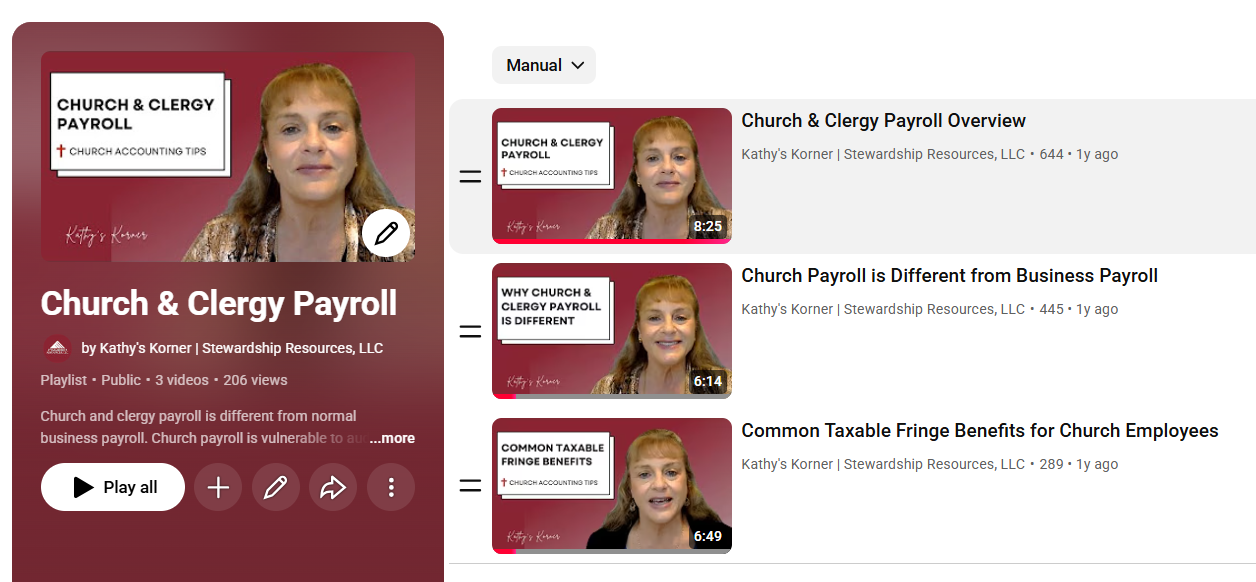
The reason is because church and clergy payroll are NOT the same as regular business payroll. It is important to learn and understand how church and clergy payroll differs.
Put payroll packages in writing. What is the gross pay? What are the benefits? What are the housing allowance payment agreements for pastors? Each pastor and lay employee should have their own package and documentation. Know the IRS rules for every item in those packages.
The fourth responsibility is to OVERSEE FINANCIAL REPORTING.
Have accurate financial reports that show a clear picture of the finances of your church. You cannot make good financial decisions if you do not have accurate information. Ask yourself and the team:
Do you have accurate financial reports?
Do you have checks and balances in place to ensure the financial reports are correct?
Do you know how to read the financial reports?
Do you know how to use them to make wise financial decisions?
It is also important to have a clear separation of duties to protect church finances as well as those who are working with church finances. Create internal controls for handling the funds. Some examples: strict rules for the offering counters and all payments should be approved not by the person who is writing the checks.
Church finance team responsibilities can feel like a lot!
Let me encourage you.
You don’t have to know everything on day one. But you should always be willing to learn, grow, and do the work with excellence and integrity.
Work together. Ask questions. Learn how to read the financial information in front of you. Protect the resources that have been entrusted to the church. And when you don’t know something, get the training or help you need.
As I said above -- Ultimately, being on the church finance team isn’t just about managing money well. It’s about helping your church use its resources wisely to carry out the ministry God has called it to do.
More Resources for Church Financial Leadership

Kathy Holt, Partner & Trainer
Stewardship Resources, LLC
About the Author
Kathy is a partner at Stewardship Resources, LLC. She specializes in church accounting and works with church leaders on church financial management and growth.
Kathy also trains and supports church bookkeepers in fund accounting and software setup. She is an authorized teaching consultant for PowerChurch Plus Church Accounting Software.
Stewardship Resources, LLC has been working with churches for over 40 years. Learn more about Kathy and our firm here.